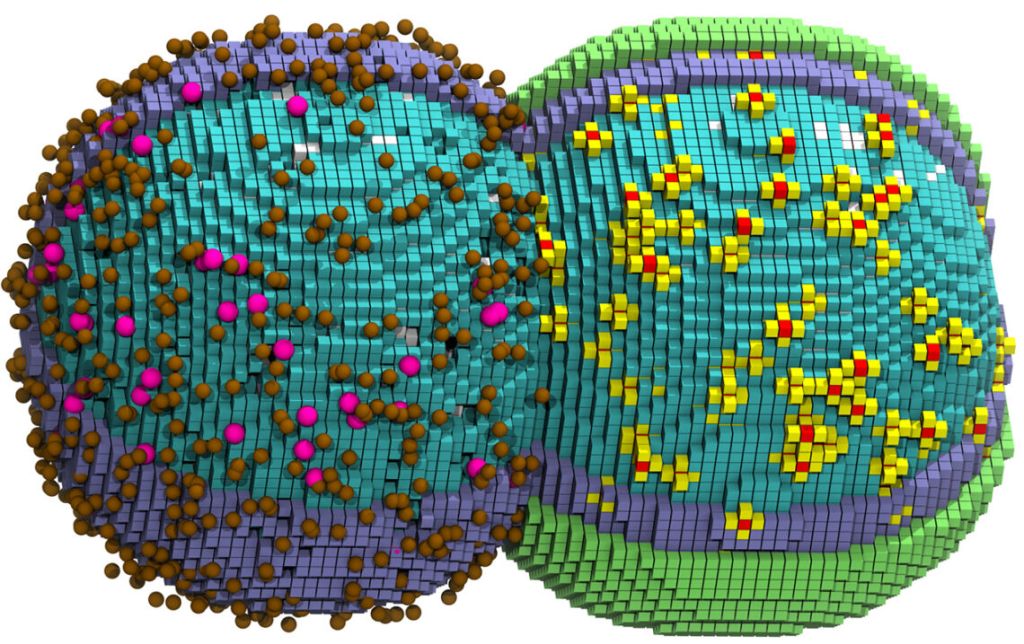
• AI is slowly becoming a real collaborator in understanding life. Over the past few months AI systems have gone from predicting structures or gene expression to actually helping design molecules, simulate cells, and guide lab experiments.

    Much of this progress comes from a new generation of foundation models in biology, massive systems trained on DNA, protein, and multi-omics data. These models can learn patterns across biology, making them useful for everything from genome decoding to protein design. According to a recent review, such models are starting to connect different biological layers—genes, cells, tissues—in a unified framework.

    Another example is a single-cell foundation model described in Nature Communications Biology, which can integrate cellular data from different species and conditions to reveal hidden regulatory links.

    https://www.nature.com/articles/s12276-025-01547-5

    Why does this matter? Because the way we do biology is changing. The time between hypothesis and experiment is shrinking dramatically. An idea that once took months to test can now move from model to lab in days. The space for innovation is also expanding. These systems let scientists ask questions that span molecules, cells, and tissues rather than treating them separately. And finally, the responsibility is growing. As AI starts generating biological designs, researchers must make sure results are reproducible, safe, and interpretable.

    https://arxiv.org/abs/2505.23579

    If you work in genomics, metabolomics, or synthetic biology, this shift affects you directly. Do you have the right datasets to fine-tune these models? Can your infrastructure support rapid cycles of prediction and validation? Do you track provenance and reproducibility for AI-generated hypotheses? The labs that can answer yes to these questions will lead the next phase of digital biology.

    AI in biology is moving from being an assistant to becoming a creative partner. The next generation of discoveries will not just come from analyzing data but from collaborating with intelligent systems that can imagine new forms of life and help us test them responsibly.

    References

    Baek S, et al. “Single-cell foundation models: bringing artificial intelligence to biology.” Nature Communications Biology, 2025.

    https://www.nature.com/articles/s12276-025-01547-5

    Le Song, Eran Segal, Eric Xing. “Toward AI-Driven Digital Organism: Multiscale Foundation Models for Predicting, Simulating and Programming Biology at All Levels.” arXiv preprint, December 2024.

    https://arxiv.org/abs/2412.06993

    “Foundational Models for AI in Biology.” Ardigen, 2025.

    “Foundation models in drug discovery: phenomenal growth in biotech.” ScienceDirect, 2025.

    https://www.sciencedirect.com/science/article/pii/S1359644625002314

  • A new paper published on arXiv, “Protein generation with embedding learning for motif diversification” (arXiv:2510.18790), introduces a new approach to protein design that combines deep learning embeddings with generative modeling. The paper is available at https://arxiv.org/abs/2510.18790

    The study addresses a long-standing challenge in computational biology: generating new protein structures that preserve key functional motifs while introducing meaningful diversity. Conventional design pipelines often fail to balance these goals. Small modifications maintain stability but limit innovation, while large ones disrupt the structural or functional integrity of the protein.

    The authors propose a model that learns high-dimensional embeddings of protein motifs and structures, allowing controlled perturbations in embedding space rather than direct coordinate manipulations. This makes it possible to generate diverse but still functional variants. Using a diffusion-based architecture, the system produces proteins that preserve biochemical motifs while varying scaffold backbones in a realistic manner.

    Applied to three benchmark systems, including a protein-protein interface and a transcription-factor complex, the model produced substantially more viable structures than existing baselines. The generated designs were predicted to fold stably and retain the target motifs, suggesting the embeddings capture key biophysical constraints.

    This work demonstrates how generative AI can move beyond prediction and toward active biological design. By integrating structural embeddings with diffusion processes, the model opens a path to broader exploration of sequence-structure space while maintaining biological plausibility. As experimental validation follows, methods like this may accelerate the creation of new enzymes, therapeutic proteins, and synthetic scaffolds.

    It is another sign that AI is beginning to influence the creative side of molecular biology, offering not just analysis but generation of functional biological matter.

  • In the past two weeks, one of the world’s largest pharmaceutical companies made a move that signals a turning point for modern biotechnology. AstraZeneca announced a $555 million collaboration with Algen Biotechnologies, a company emerging from Jennifer Doudna’s Berkeley lab, to merge artificial intelligence with CRISPR-based gene editing. The partnership marks one of the most ambitious attempts yet to fuse computational prediction with biological precision.

    The premise is simple but transformative. AI has already revolutionized how scientists analyze genomic data, but AstraZeneca’s deal pushes the technology deeper into discovery itself. The new platform will use AI not only to interpret results but to generate hypotheses — identifying which genes to edit, which mutations to target, and which pathways are most likely to lead to successful therapies.

    This approach represents a shift from analysis to design. Traditionally, drug discovery has been a long and costly process of trial and error. AI promises to change that by training on vast biological datasets and predicting, with increasing confidence, which interventions will work. CRISPR then acts as the experimental engine, rapidly testing those predictions in living systems. Together, the two technologies could compress years of lab work into months.

    AstraZeneca is focusing this collaboration on immunology, where the genetic underpinnings of diseases like asthma, arthritis, and inflammatory disorders remain only partially understood. By combining AI-driven target discovery with CRISPR validation, the company hopes to uncover new therapeutic pathways that conventional screening would miss.

    The financial structure of the deal — with $555 million in milestone payments — underscores how seriously the pharmaceutical industry now treats AI as a strategic core, not just an experimental add-on. Algen retains ownership of its platform, while AstraZeneca secures rights to commercialize any therapies that emerge, creating a model for how AI start-ups and established drug makers can work together.

    Still, expectations are high, and reality will demand patience. Despite the hype, no AI-designed drug has yet completed clinical approval. Biology remains unpredictable, and algorithms that perform well in silico must still face the rigorous constraints of real cells, tissues, and patients. Yet even partial success would represent a leap forward in productivity and precision.

    The convergence of AI and CRISPR may ultimately redefine what it means to discover a drug. Instead of searching through chemical space blindly, researchers will navigate biological systems as if guided by a map. With each iteration, the AI will learn from both failure and success, evolving alongside the science it helps create.

    AstraZeneca’s new partnership is not just a business deal — it is a declaration that biology’s next revolution will be computational. The merger of AI and gene editing promises a future where designing cures is not a matter of chance, but of code.

    References
    https://www.ft.com/content/c4b5153f-be07-454d-911f-31bb011f09ae
    https://www.nature.com/articles/d41586-024-02549-5
    https://www.science.org/doi/10.1126/science.adj3475

  • Biology has entered a new era, one defined not by microscopes but by algorithms. Artificial intelligence is reshaping how scientists understand life, from the level of molecules to entire ecosystems. What once took years of manual experimentation can now happen in weeks, driven by models that learn directly from biological data. Far from replacing scientists, AI is expanding their reach, revealing patterns that no human could see unaided.

    In genetics, AI is accelerating the decoding of complex traits. Machine learning models analyze entire genomes to uncover subtle combinations of mutations that influence health and disease. This approach is allowing researchers to predict risk factors and uncover previously hidden genetic relationships. In cancer research, AI algorithms sift through tumor data to identify new therapeutic targets and match treatments to patient-specific molecular signatures.

    Protein science is another frontier transformed by AI. Deep learning models like AlphaFold have solved one of biology’s hardest problems: predicting how amino acid sequences fold into three-dimensional structures. This breakthrough has opened the door to designing new enzymes, antibodies, and materials, turning biology into a field where researchers can not only read nature’s code but also write it.

    Even in medicine, AI is enabling a more personal understanding of the human body. By combining genomic, imaging, and clinical data, AI can detect disease earlier, suggest targeted therapies, and guide precision interventions. Doctors are beginning to use AI not as a replacement for judgment but as a companion that brings molecular insight into every decision.

    The impact extends beyond humans. Ecologists use AI to monitor biodiversity, predict ecosystem shifts, and track endangered species. Synthetic biologists use AI-driven design tools to create sustainable materials and biofuels. The same techniques that once optimized web searches are now helping decode the language of life.

    This is the quiet optimism of modern biology. Artificial intelligence is not an intruder in the life sciences but a collaborator. It turns vast biological complexity into actionable knowledge and brings the scientific imagination closer to creation itself. For the first time, we are not just observing life — we are beginning to understand its algorithms.

    References
    https://www.nature.com/articles/d41586-021-03819-2
    https://www.science.org/doi/10.1126/science.abh1809
    https://www.cell.com/cell/fulltext/S0092-8674(22)01350-4

  • Cybersecurity has always been an arms race. As attackers develop new tactics, defenders scramble to respond with updated rules, signatures, and monitoring systems. The scale and sophistication of modern threats, however, are overwhelming traditional approaches. Artificial intelligence is now reshaping the battlefield, offering tools that can adapt, learn, and defend in ways that static methods cannot.

    AI excels at anomaly detection. Instead of relying on predefined rules, machine learning models learn what “normal” network behavior looks like and flag deviations that may indicate intrusions. This allows early detection of zero-day exploits or insider threats that would slip past conventional firewalls. Deep learning further refines this ability, correlating signals across logs, traffic, and endpoints to reveal patterns invisible to human analysts.

    Automation is another advantage. AI-driven security orchestration platforms can respond in real time, isolating compromised devices, blocking malicious traffic, or rolling back suspicious changes before damage spreads. This reduces response times from hours to seconds, critical in stopping fast-moving ransomware or distributed denial-of-service attacks.

    Adversarial AI adds a new dimension to the conflict. Attackers are beginning to use machine learning to generate phishing campaigns, craft malware variants, or probe defenses intelligently. Defenders must counter with equally adaptive models, leading to a dynamic contest of algorithms. Research into adversarial robustness is essential to ensure that defensive AI cannot be fooled by manipulated inputs.

    Challenges remain in trust and transparency. Security teams must understand why an AI flagged a particular event, otherwise they risk being overwhelmed by false positives or missing real threats. Hybrid approaches that combine AI-driven detection with human expertise are emerging as the most reliable strategy.

    AI will not eliminate cyberattacks, but it is redefining how defense operates. The future of cybersecurity lies in systems that learn continuously, adapt dynamically, and fight back at machine speed. In this frontier, intelligence itself has become the strongest line of defense.

    References
    https://arxiv.org/abs/2006.00564

    https://www.nature.com/articles/s41586-019-1716-1

    https://www.science.org/doi/10.1126/science.aar3787

  • Proteins are the molecular machines of life, and designing them has long been one of biology’s greatest challenges. Traditional methods rely on trial and error or evolutionary insights, but artificial intelligence is opening a new frontier. By learning the rules of protein folding and function, AI systems can now generate novel proteins with tailored shapes and properties.

    AlphaFold’s success in predicting protein structure was a turning point, proving that deep learning could capture the complex physics of folding with near-experimental accuracy. But the field has moved beyond prediction to creation. Generative models such as diffusion-based frameworks and language-model-inspired architectures treat amino acid sequences like text, enabling the design of entirely new proteins.

    Applications are already emerging. AI-designed enzymes can catalyze chemical reactions not found in nature, promising greener industrial processes. In medicine, custom proteins are being explored as therapeutics, binding with high specificity to disease targets. Even materials science is benefitting, with AI-generated proteins forming the basis of new biomaterials and nanostructures.

    Challenges remain in bridging the gap between in silico design and in vivo performance. Proteins designed computationally must still fold correctly, remain stable in biological environments, and function as intended. Experimental validation is costly and slow, making it the bottleneck. Researchers are working on better feedback loops, where experimental data continuously refines generative models.

    AI in protein design is redefining what is possible in biotechnology. Instead of searching nature’s catalog for useful molecules, we are beginning to write our own entries in the book of life.

    References
    https://www.nature.com/articles/s41586-021-03819-2
    https://www.science.org/doi/10.1126/science.ade6501
    https://arxiv.org/abs/2304.04181

  • Most machine learning still follows a centralized model. Data is collected, sent to a server, and used to train large models in the cloud. But this approach runs into three problems at scale: privacy, bandwidth, and latency. Federated learning is emerging as an answer by moving training to the edge and keeping raw data local.

    In federated learning, devices such as phones or IoT sensors train small updates to a shared model using their own data. Only the weight updates are transmitted back to a central server, where they are aggregated into a global model. This design ensures that sensitive data never leaves the device, reducing privacy risks while still contributing to collective intelligence.

    The technical challenges are significant. Edge devices vary widely in compute power, network stability, and data distribution. Non-IID (independent and identically distributed) data makes convergence harder because each device sees a biased slice of the world. Communication efficiency is another hurdle: transmitting updates frequently can overwhelm networks, so methods like update compression and asynchronous aggregation are essential.

    Security also requires attention. Malicious devices can attempt model poisoning by sending corrupted updates. Defenses include anomaly detection, Byzantine-resilient aggregation rules, and secure multi-party computation to protect the integrity of contributions.

    Despite the challenges, federated learning is already in production. Google uses it for keyboard prediction on Android devices. Healthcare projects use it to analyze medical records across hospitals without centralizing sensitive data. Banks explore it to detect fraud collaboratively without exposing customer information.

    Federated learning is more than a technique, it is a shift in how we think about machine intelligence. Instead of pulling all data into one place, intelligence is grown collectively across a network of devices. In a world where privacy and efficiency matter as much as accuracy, this distributed approach may define the future of AI.

    References

    https://arxiv.org/abs/1602.05629

    https://federated.withgoogle.com/

    https://www.nature.com/articles/s42256-021-00359-2

  • Aging has long been measured by the calendar, but biology rarely follows neat human timetables. In recent years researchers have turned to DNA methylation patterns as a new way to quantify age. These so-called epigenetic clocks are becoming one of the most powerful tools in biomedicine.

    The principle is straightforward. Chemical tags known as methyl groups attach to specific regions of DNA. The distribution of these tags shifts predictably over time. By examining thousands of methylation sites across the genome, scientists can build mathematical models that estimate biological age with surprising accuracy.

    What makes this approach transformative is the distinction between chronological and biological age. Two people may share the same birthday, yet their methylation patterns can reveal vastly different aging trajectories. Factors such as lifestyle, diet, exposure to toxins, and chronic disease leave measurable imprints on the epigenome. Epigenetic clocks therefore provide a real-time readout of how an individual is aging internally.

    The applications are broad. In clinical research, these clocks are being used to test whether anti-aging interventions truly slow biological time. In epidemiology, they are helping to identify populations at higher risk for age-related disease. Even forensic science is exploring methylation signatures to estimate the age of unidentified individuals.

    Challenges remain. Not all epigenetic clocks agree, and the link between methylation patterns and underlying mechanisms of aging is still debated. Yet the momentum is clear. With better models and larger datasets, epigenetic clocks are moving from experimental tools to practical biomarkers. They may soon become routine in assessing health, guiding therapy, and even shaping how we think about longevity itself.

    References
    https://www.nature.com/articles/s41576-019-0098-0
    https://www.science.org/doi/10.1126/science.aau3865
    https://www.cell.com/trends/genetics/fulltext/S0168-9525(21)00161-8

  • In the last two weeks researchers at the CSIR Centre for Cellular and Molecular Biology in Hyderabad revealed a striking new insight into how our cells change shape and move in response to stress or infection. Cell movement has always been known to depend on actin filaments, the thin protein strands that push out the cell membrane and allow it to crawl forward. What was less clear was how these filaments start forming so quickly and in such a precise pattern.

    The team discovered that a protein called SPIN90 is the missing link. Working together with the Arp2/3 complex, SPIN90 initiates the very first actin filaments at a distinctive angle of about 150 degrees. That geometry is not random. It sets up a scaffold that branches rapidly, giving the cell the structure it needs to surge toward wounds, invading microbes, or other signals that demand a fast response.

    Using cryogenic electron microscopy the researchers were able to see this process unfold at near atomic detail. They captured SPIN90 guiding the first steps of filament growth and creating the conditions for an entire actin network to bloom almost instantly. The discovery helps explain how immune cells can chase pathogens so quickly, how tissues repair themselves after injury, and even how cancer cells sometimes manage to invade new environments.

    The implications are broad. If scientists can learn how to influence SPIN90’s activity they may eventually be able to control cell movement in therapeutic ways, slowing down invasive tumors or boosting the ability of immune cells to reach infection sites. At the same time the finding highlights just how much remains unknown in the everyday workings of our own cells. What turns SPIN90 on or off, how the angle of filament growth is controlled, and whether this mechanism changes across different cell types are questions that remain wide open.

    This discovery is a reminder that even the most fundamental processes in biology still hold surprises, and that with new imaging technologies we can see details of life that were invisible until now.

    Francis J, Pathri AK, Shyam KT, Sripada S, Mitra R, Narvaez-Ortiz HY, Eliyan KV, Nolen BJ, Chowdhury S. Activation of Arp2/3 complex by a SPIN90 dimer in linear actin-filament nucleation. Nature Structural & Molecular Biology. 2025 Sept 15. DOI: 10.1038/s41594-025-01673-8 Nature+1

    “CCMB scientists uncover how cells reshape to fight disease.” Times of India, reported Sep 16, 2025. The Times of India

    Liu T, Cao L, Mladenov M, Way M, Moores CA. Arp2/3-mediated bidirectional actin assembly by SPIN90 dimers in metazoans [preprint]. bioRxiv. 2025 Jan 31. DOI: 10.1101/2025.01.31.635869 BioRxiv+1

  • Marine biologists working in the Great Barrier Reef have identified a previously unknown species of coral capable of recovering from bleaching events significantly faster than any other documented species. The research, published in Current Biology, details how this coral can rebuild its symbiotic relationship with algae in as little as two weeks.

    Most corals rely on microscopic algae called zooxanthellae for energy through photosynthesis. When ocean temperatures rise or other stressors occur, corals expel these algae, leading to the white, weakened appearance known as bleaching. Recovery, if it happens at all, usually takes months or even years.

    However, the newly discovered coral, provisionally named Acropora resurgens, appears to have evolved a more dynamic symbiotic system. Scientists observed that this coral recruits and reestablishes symbiosis with a wider variety of algal strains, giving it a rapid recovery edge.

    The coral was found in a relatively isolated part of the northern reef system, where water temperatures fluctuate more dramatically than in other regions. Researchers believe these conditions may have driven the evolution of this rapid-recovery trait.

    If this trait can be understood at a genetic level, it could have far-reaching implications for coral conservation and reef restoration. Some researchers are already considering ways to incorporate this resilience into coral breeding and replanting efforts aimed at protecting global reef ecosystems under climate pressure.

    This discovery adds to a growing body of evidence that nature may be evolving new defense mechanisms faster than previously thought, offering cautious optimism in the face of ongoing environmental challenges.

    Sources

    https://www.cell.com/current-biology/fulltext/S0960-9822(25)00476-9

    https://www.abc.net.au/news/2025-06-12/rapid-recovery-coral-great-barrier-reef-science/103264340

    https://www.gbrmpa.gov.au/news/2025/fast-healing-coral-hope-for-reef